Landscape Information
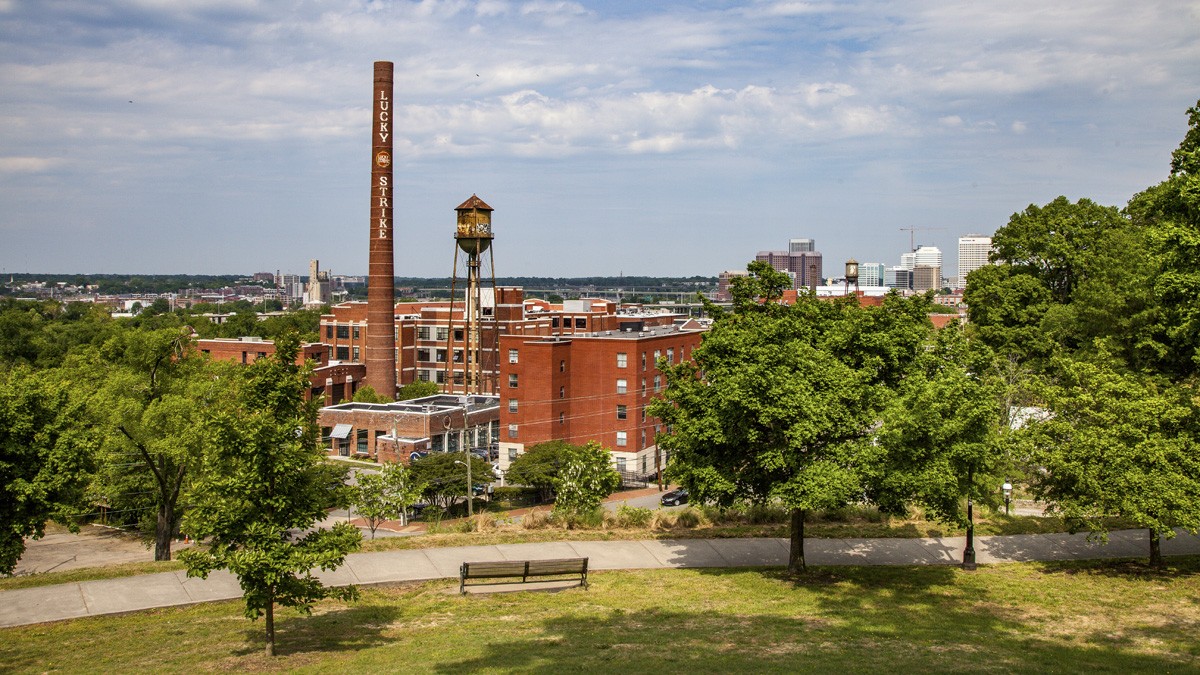
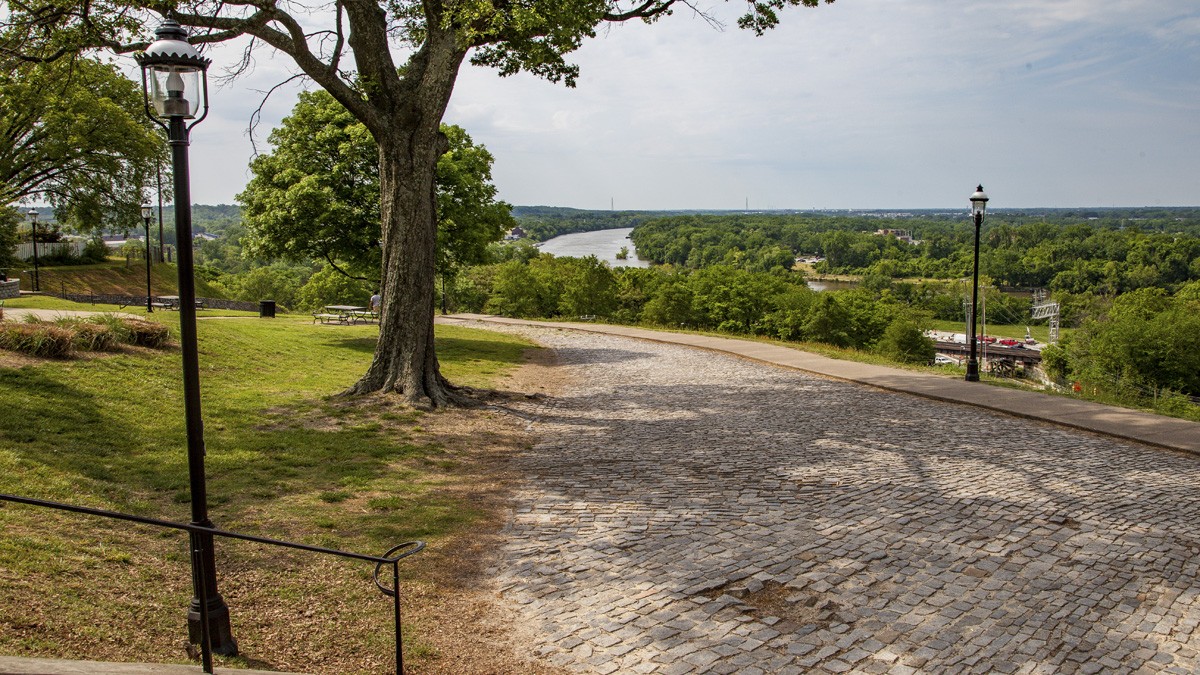
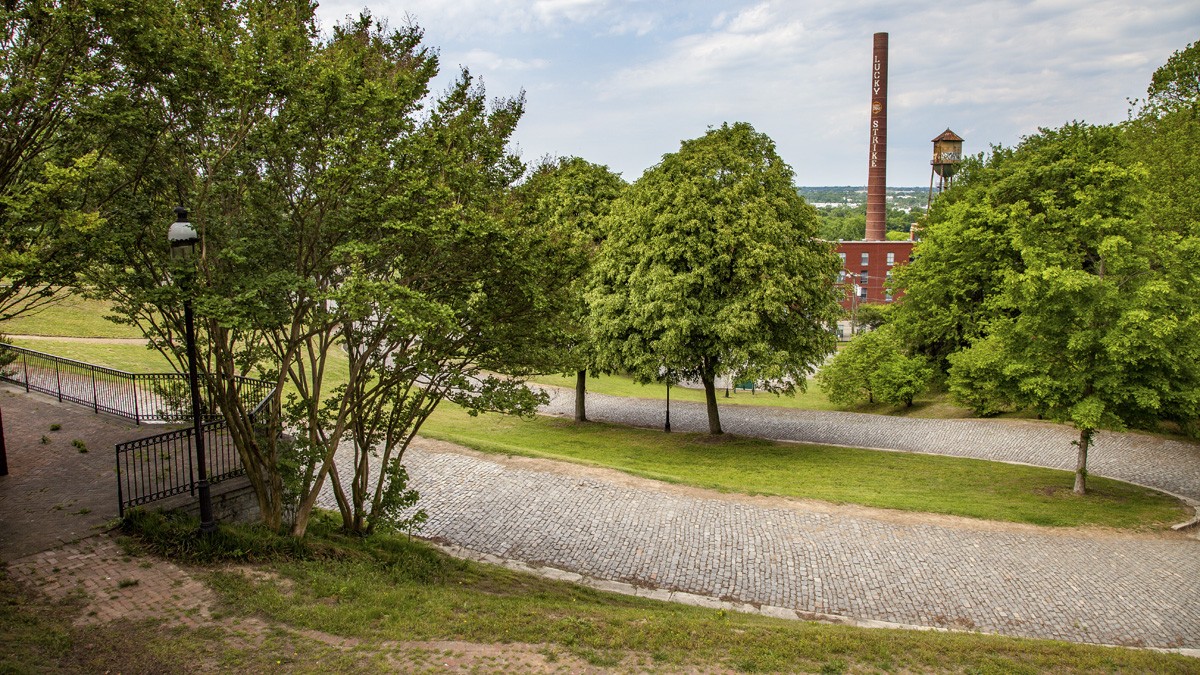
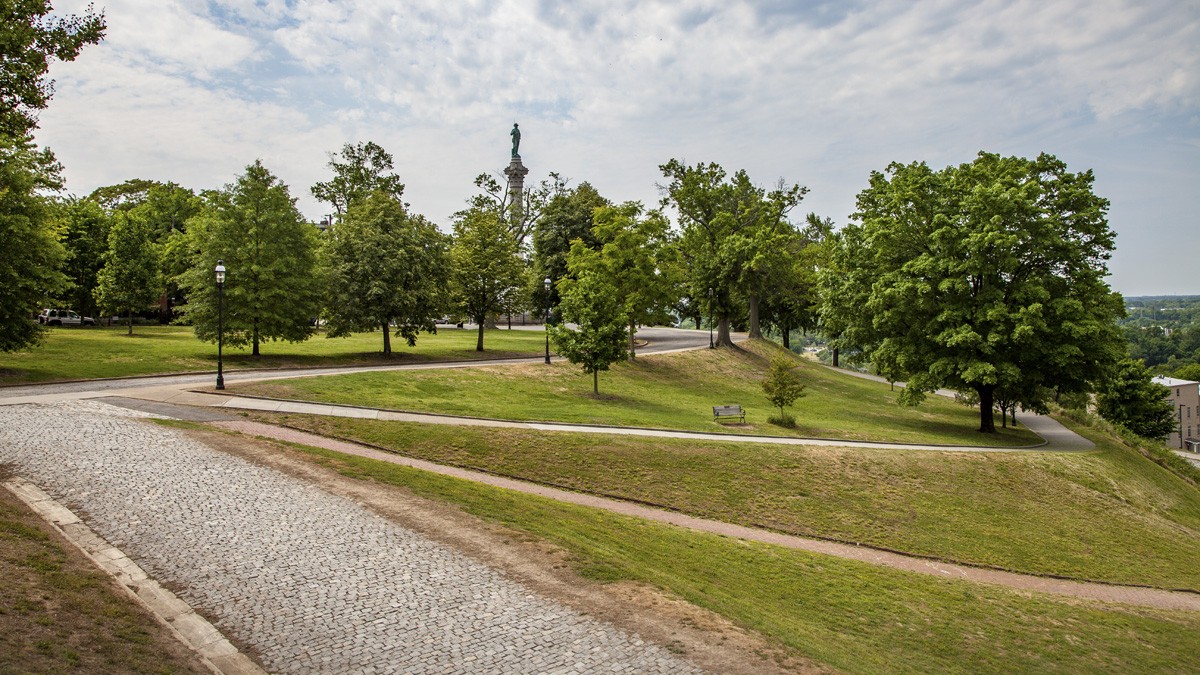
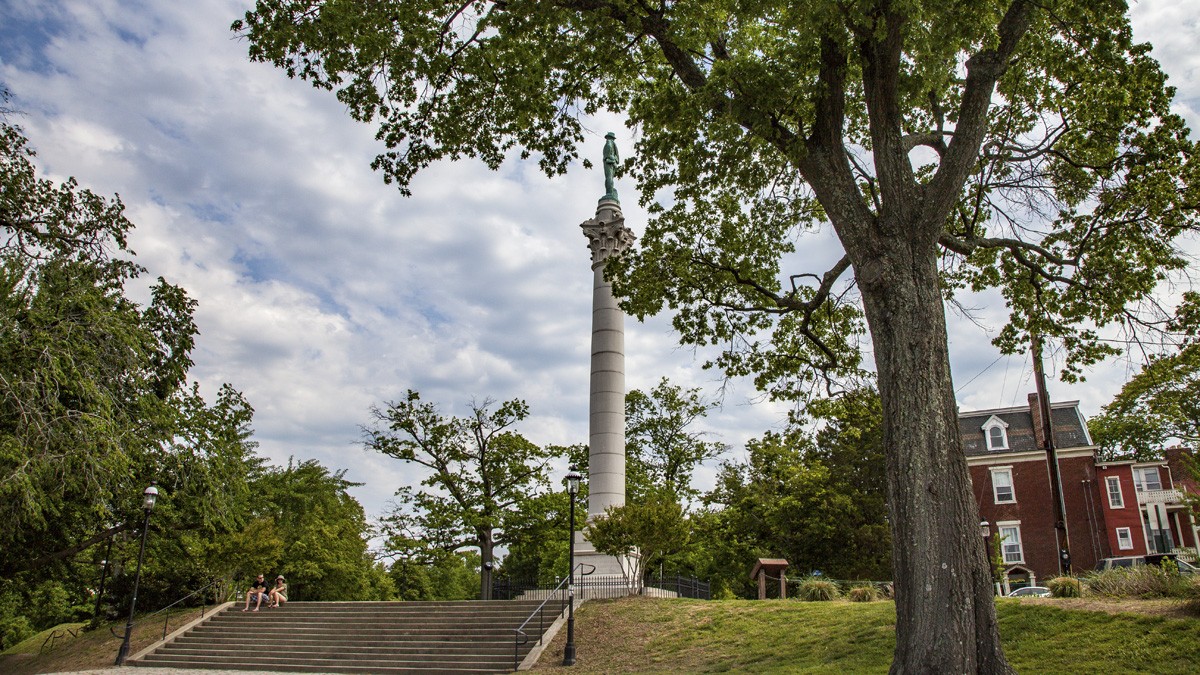
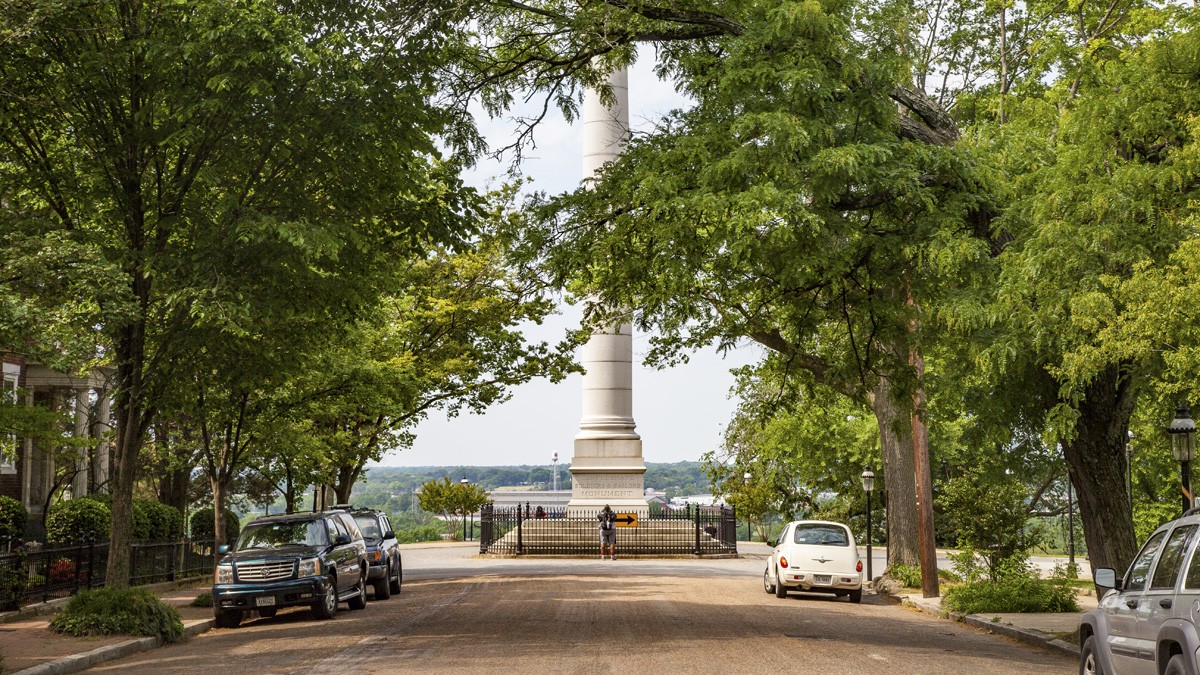
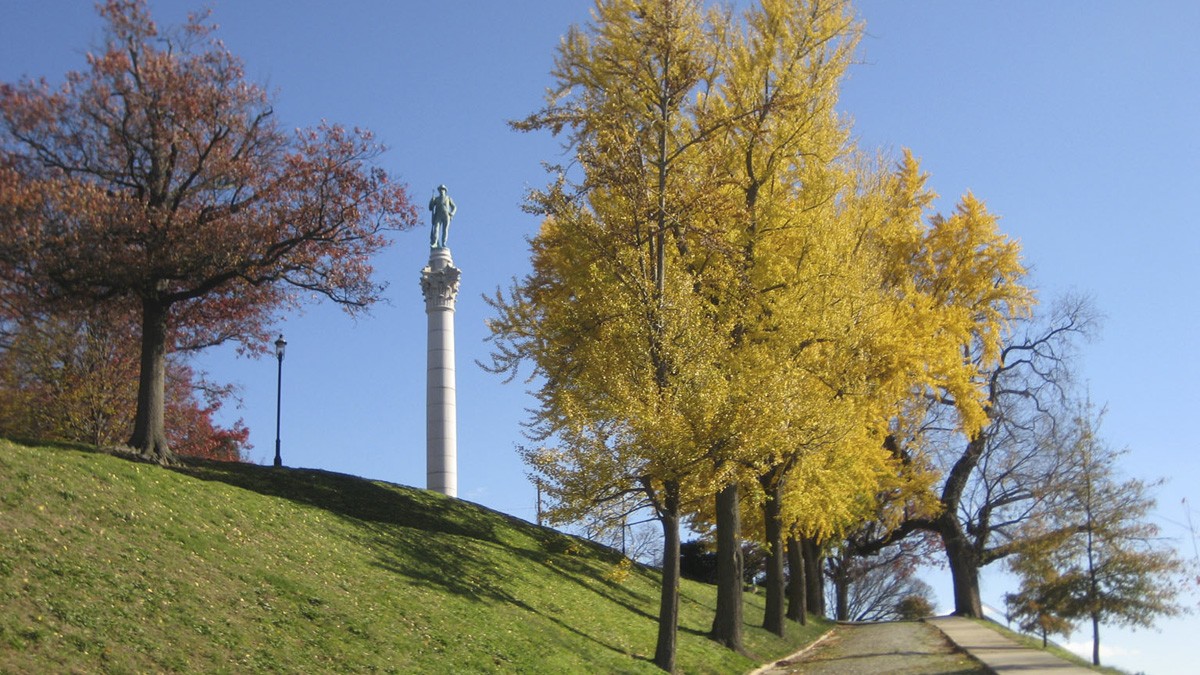
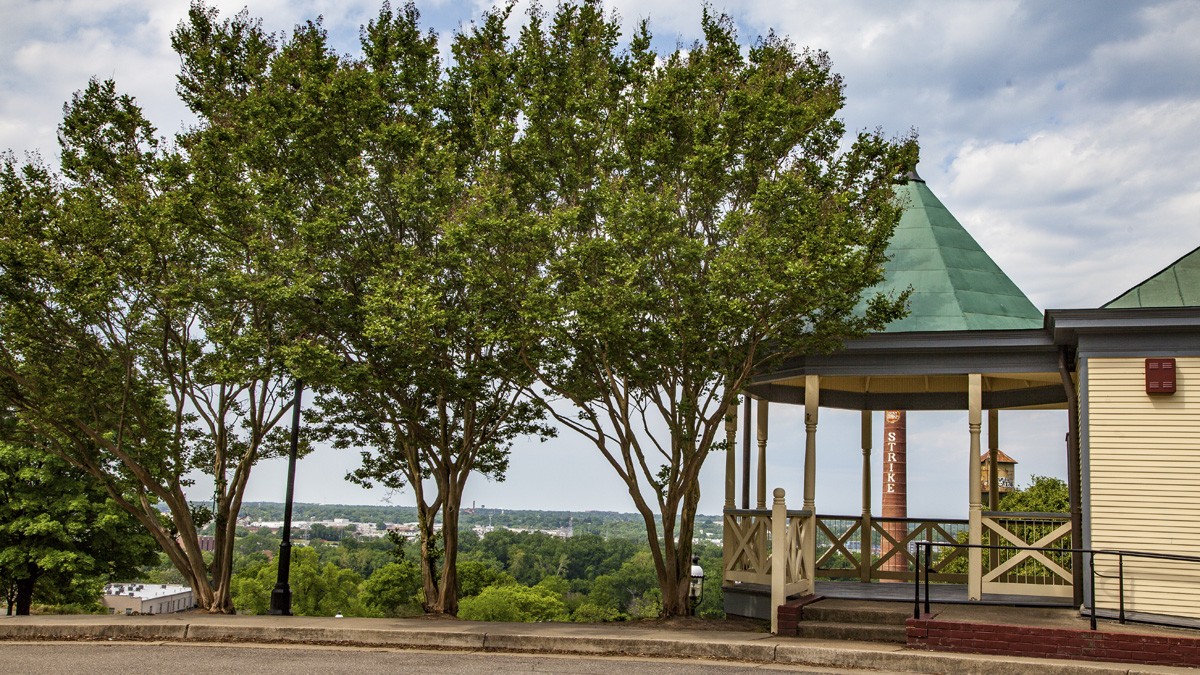
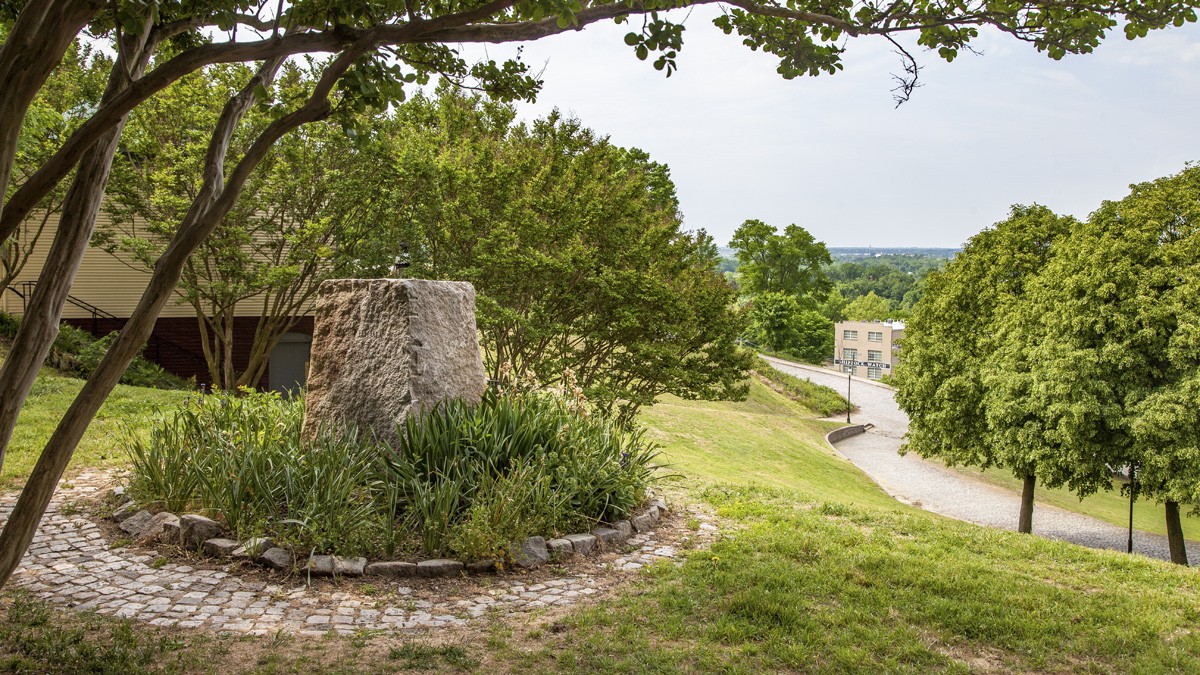
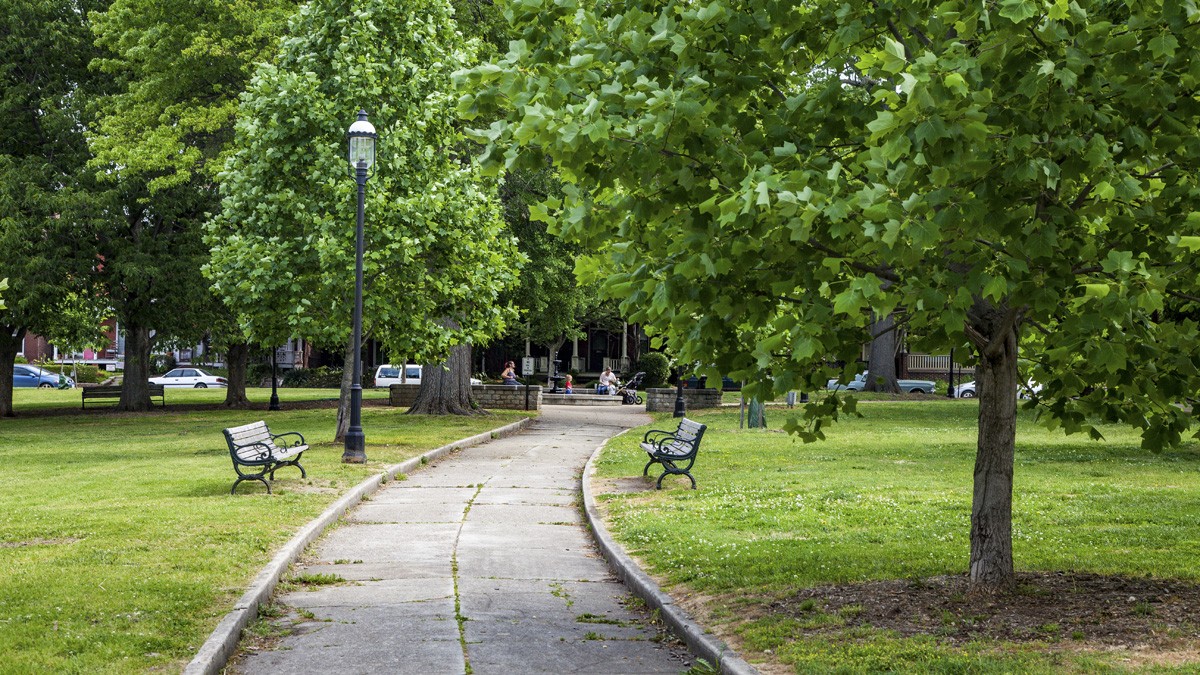
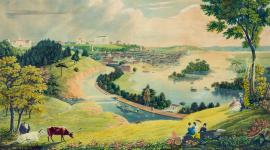
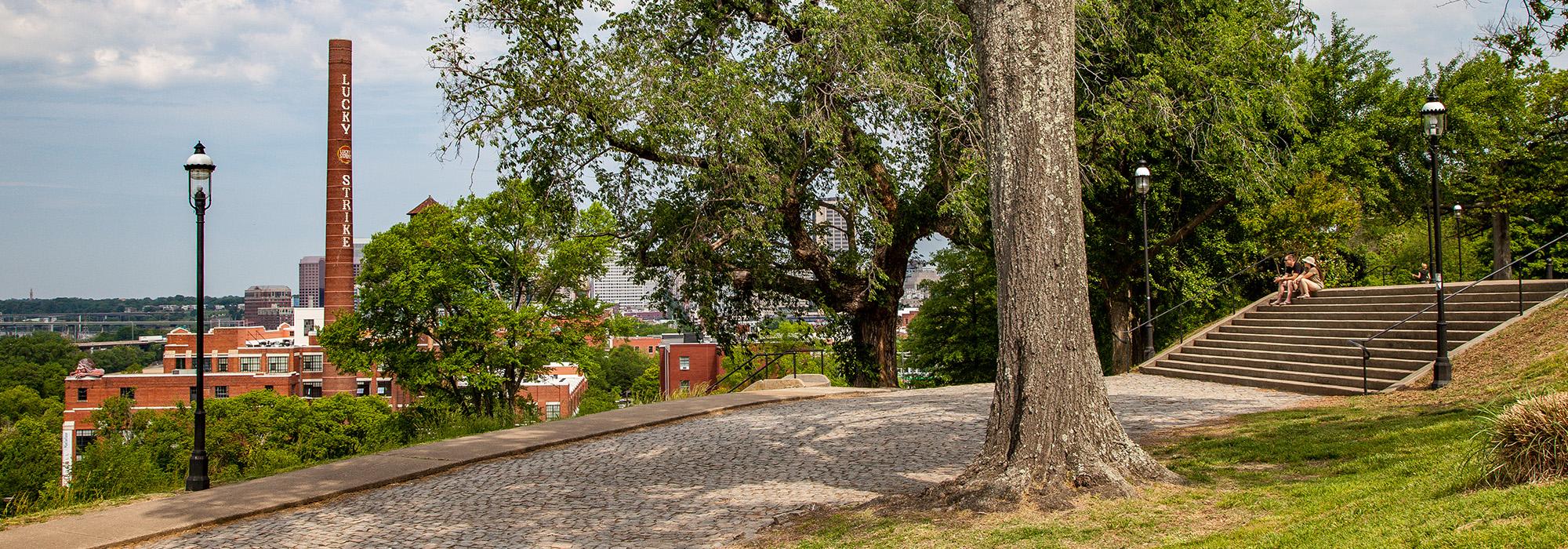
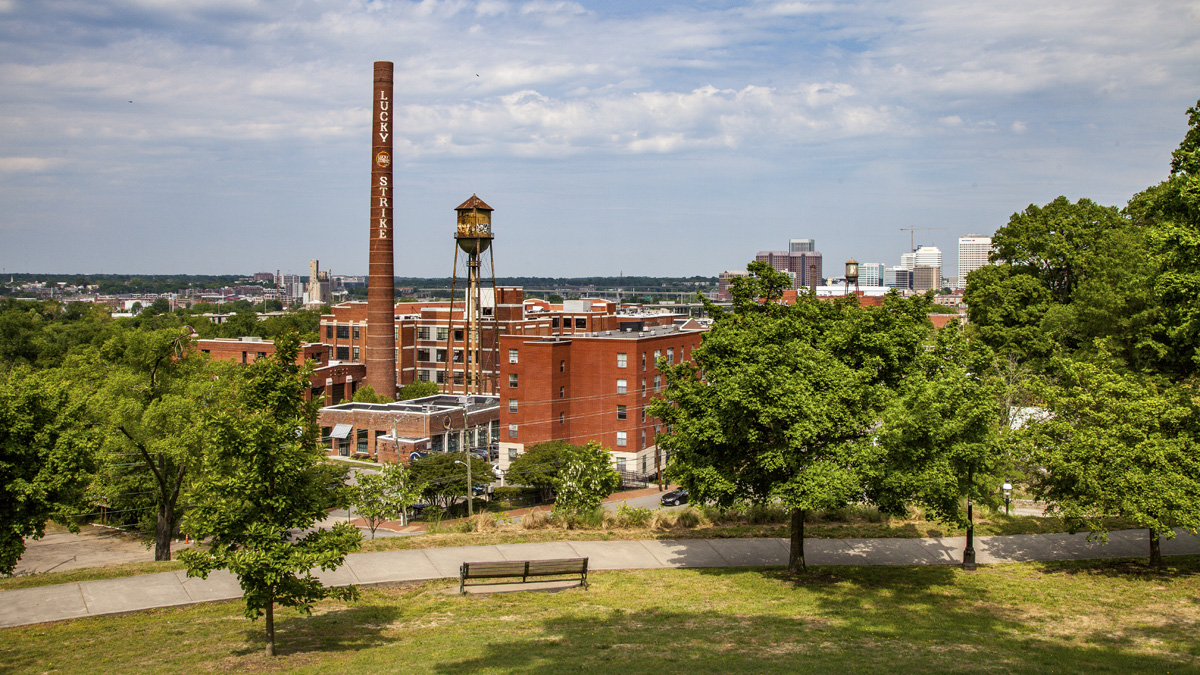
With a hilltop vista overlooking the James River that historically resembled that of Richmond-upon-Thames, England, the view from this high point is said to have given Richmond its name. The seven-acre park was one of the first five parks designed by city engineer Wilfred Cutshaw during the 1850s to offer “breathing places” for citizens to take in healthful air. It is situated in the Church Hill neighborhood, where mid-nineteenth century factory owners and merchants built homes in order to survey the city’s natural beauty and commercial prosperity in the wharf district down below. Originally called Marshall Square, the park soon became known as Libby Hill Park, reflecting the prominence of landowner Luther Libby’s house nearby. The naturalistic upper segment of the park is connected by meandering paths to a lower terrace that features stone benches and an ornamental fountain. At the intersection of these two areas, the Soldiers and Sailors Monument sits on a large round paved terrace. The monument, designed by Cutshaw and erected in 1894, is an iconic Confederate soldier-topped column modeled after Pompey’s Pillar in Alexandria, Egypt, that punctuates the skyline in Richmond’s east end. Picturesque carriage roads connect the park and residences on the hilltop to the river and commercial areas below. Today the park continues to function as a space for passive recreation and community gatherings. It was designated a National Historic Landmark as part of the St. John’s Church Historic District in 1969.